
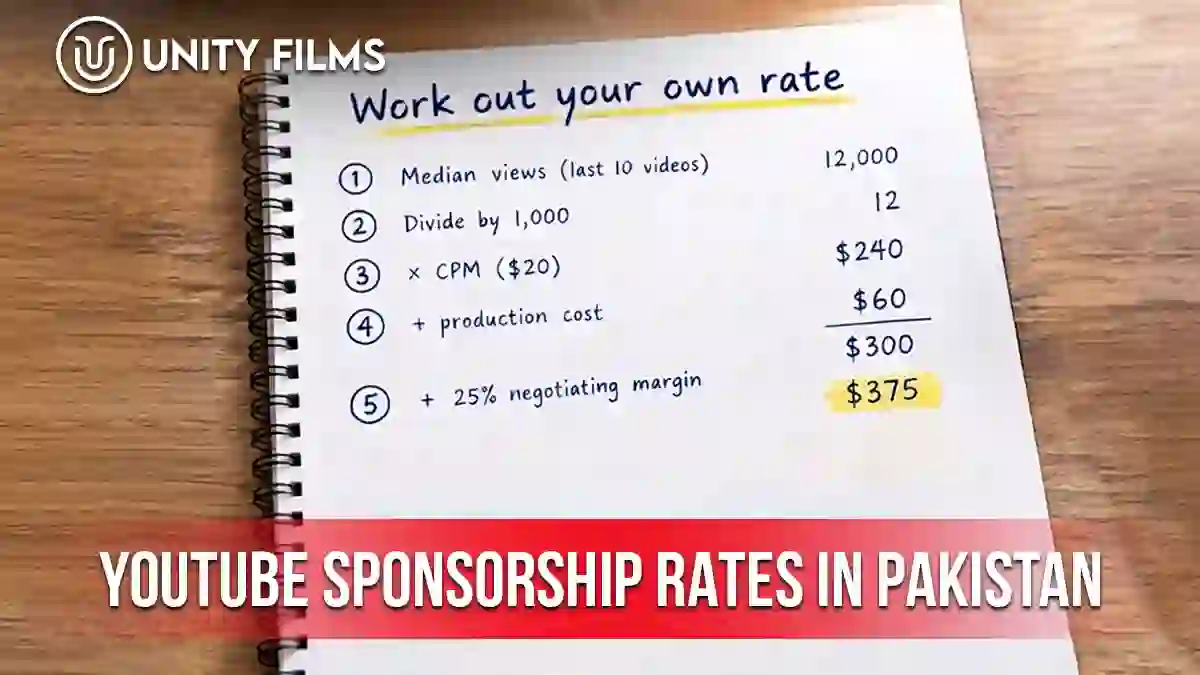
Quick answer: YouTube sponsorship rates in Pakistan are driven by where your viewers are, not where you are. Published figures for Pakistani creators range from PKR 10,000 to PKR 200,000 per sponsored video, and they disagree because they measure different things. Use a formula instead: median views of your last ten videos, divided by 1,000, multiplied by your niche’s sponsorship CPM.
A brand messages you asking for your rate. You have no idea what to say.
Quote too low and you have set a price you will live with for years, because that brand will tell others. Quote too high with nothing to back it up and they stop replying.
Most Pakistani creators handle this by guessing, or by asking another creator what they charge. The published YouTube sponsorship rates in Pakistan do not help either, for reasons covered below. Both produce a number you cannot defend the moment a brand pushes back.
This guide gives you a number you can defend, and explains why the published Pakistani figures vary so wildly.
What Are YouTube Sponsorship Rates in Pakistan Right Now?
Here are the published ranges. Read them with care, because they do not agree with each other.
| Source and segment | Reported rate |
|---|---|
| Pakistani creators, per collaboration | PKR 10,000 to 50,000 |
| Pakistani creators, top tier | PKR 3 million and above |
| Pakistani creators, 10,000 to 50,000 subscribers | PKR 50,000 to 200,000 per sponsored video |
| Global integration benchmark | 10 to 50 US dollars per 1,000 expected views |
| Global sponsorship CPM range | 15 to 80 US dollars |
Notice the problem. One source says a Pakistani creator earns PKR 10,000 to 50,000 per collaboration. Another says a creator with 10,000 to 50,000 subscribers charges PKR 50,000 to 200,000. Those overlap badly, and both are published as fact in 2026.
Neither is lying. They are describing different creators, different formats, and different audiences, and neither one says so.
Why Do the Published Numbers Disagree So Much?
Four reasons, and understanding them is worth more than any range above.
They mix up formats. A mention inside a video, a dedicated review video, and a Short are three different products. Dedicated videos typically price at two to four times an integration. Shorts price at roughly a quarter to a half.
They mix up audiences. This is the big one, covered in its own section below.
They mix up product deals with cash deals. A large share of Pakistani sponsorships are product-only: a brand sends a phone or a skincare set and calls it a collaboration. Averaging those in with paid deals drags the published numbers around.
Engagement is invisible in subscriber counts. A channel with 80,000 subscribers and strong engagement routinely out-earns one with 500,000 subscribers and weak engagement. Brands measure this and creators rarely do.
So stop looking for the correct YouTube sponsorship rates in Pakistan. There is no single figure to find. Build your own.
The Formula That Replaces Guessing
This is the standard method, and it works in Pakistan exactly as it works anywhere else.
Step 1. Take the median views of your last ten videos. Median, not average, so one viral video does not distort it.
Step 2. Divide by 1,000.
Step 3. Multiply by your niche’s sponsorship CPM.
Rough niche CPM bands from published 2026 data: finance and business sit highest, tech in the middle, gaming and general entertainment lowest, with lifestyle between.
Step 4. Add your production cost. Filming, editing, and your time are not included in the CPM.
Step 5. Quote 20 to 30 percent above that number, because first offers get negotiated down and you want room.
Now you have a rate with a reason attached. When a brand pushes back, you are not defending a feeling. You are showing them your median views and the CPM band for your category.
One warning. Brands typically open 20 to 40 percent below market, and creators who negotiate rather than accepting the first number report meaningfully higher final rates. The first figure a brand sends is an opening position, not a valuation.
Why Your Audience Location Matters More Than Your Location
This is the single most important thing on this page, and almost no Pakistani guide explains it.
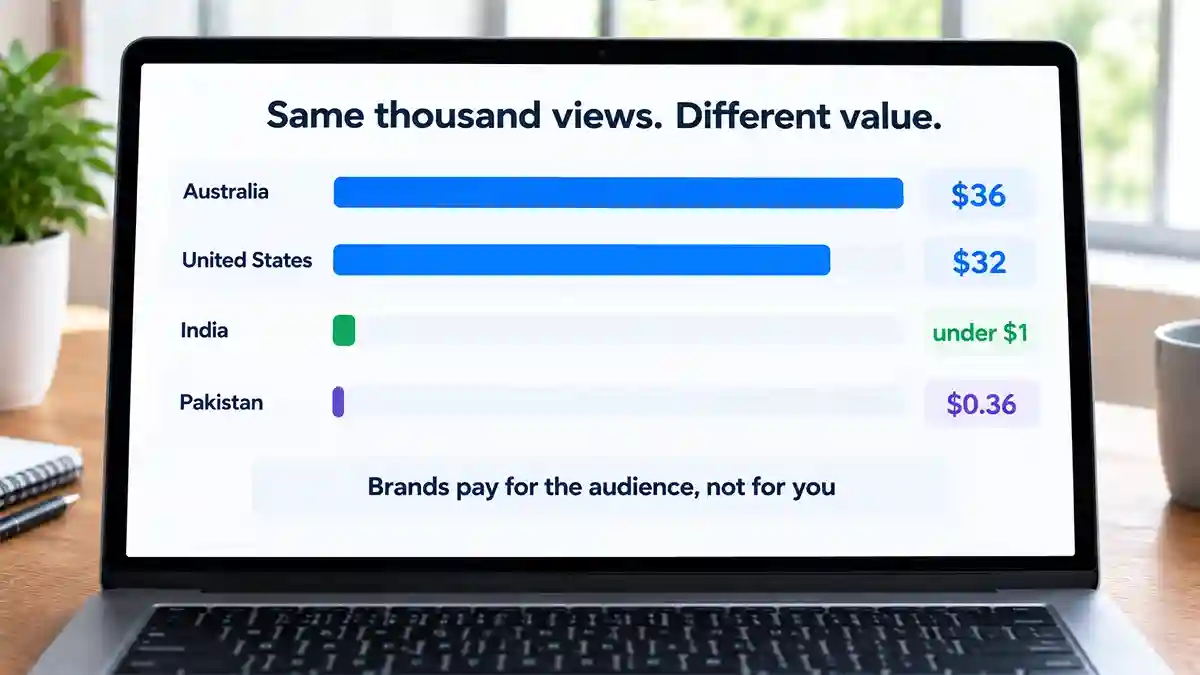
Look at the gap in AdSense CPM by country. Published 2026 figures put Australia around 36 US dollars and the United States around 32 dollars per thousand views. India sits under a dollar. Pakistan sits at roughly 0.36 dollars.
That is close to a ninety-fold difference for the same thousand views.
Brands price sponsorships on the same logic, because they are buying access to people who can buy their product. DataReportal’s Digital 2026 Pakistan report publishes the local audience figures each year, which is useful context when a brand asks how many people you actually reach here. A finance channel with a mostly Pakistani audience commands a fraction of what the same channel commands with a mostly US audience.
Here is the part that changes what you do next. Brands are paying for the audience, not for you. A creator based in Rawalpindi whose viewers are 65 percent American is priced by a brand the same way a creator based in Texas is. Your location is not what is being valued. Your viewers are.
So if sponsorship income is the goal, the highest-leverage decision is not your rate card. It is whether you are making content in English aimed at an international audience, or content in Urdu aimed at Pakistan.
Neither choice is wrong. They are simply different businesses, and the sponsorship rate you can command follows from that choice rather than from how hard you negotiate.
Pakistani Brands That Sponsor YouTubers
If your audience is local, the money is local too, and the categories are predictable.
E-commerce and marketplaces. The most active category, and usually the first paid deal a growing Pakistani channel lands.
Consumer electronics and mobile brands. Heavy in the tech and review space, often starting as product-only deals before any cash appears.
Food, FMCG, and restaurants. Strong for lifestyle, family, and vlogging channels, especially around Ramadan and Eid.
Clothing, fashion, and beauty. Active year-round, peaking through wedding season.
Digital services, fintech, and apps. The fastest growing category, and usually willing to pay cash rather than product because they are measuring installs.
Education and training providers. A good fit for anyone teaching a skill on camera.
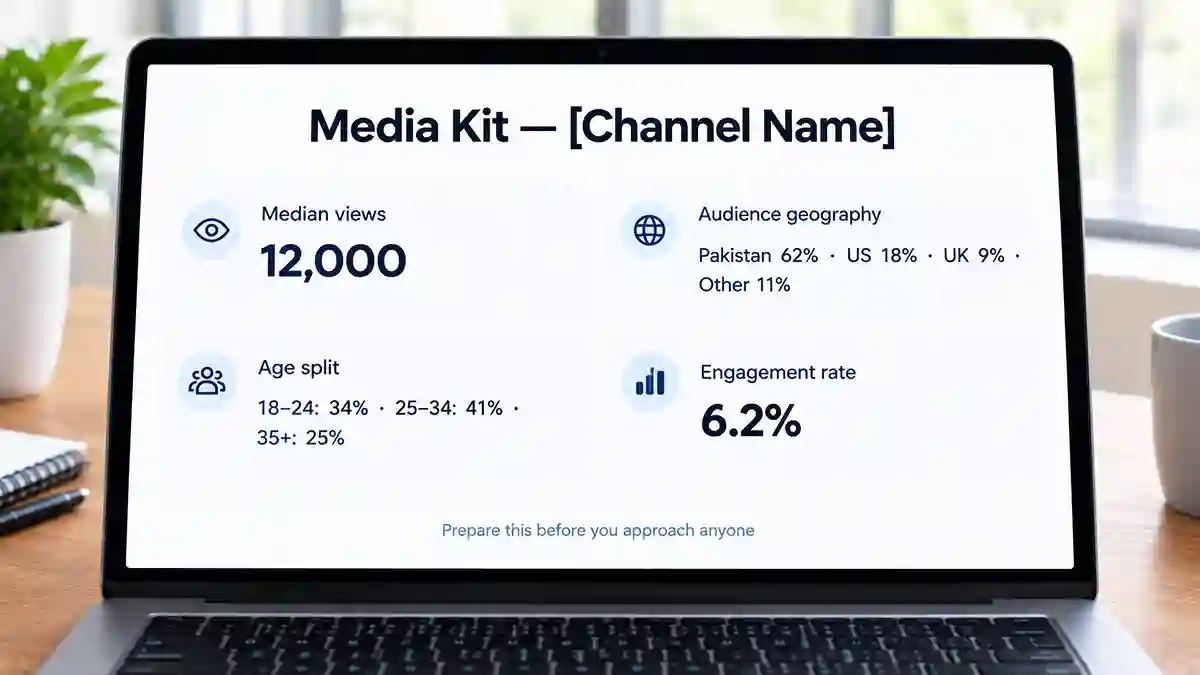
Two practical points. Start with brands already sponsoring channels in your category, because they have a budget line for it and do not need convincing that YouTube works. And prepare a one-page media kit with your median views, audience geography, age split, and engagement rate before you approach anyone. Most Pakistani creators pitch without one, which is why brands open low.
What Else Is Negotiable Besides the Fee?
The fee is only part of the deal, and the rest is where creators quietly give away value.
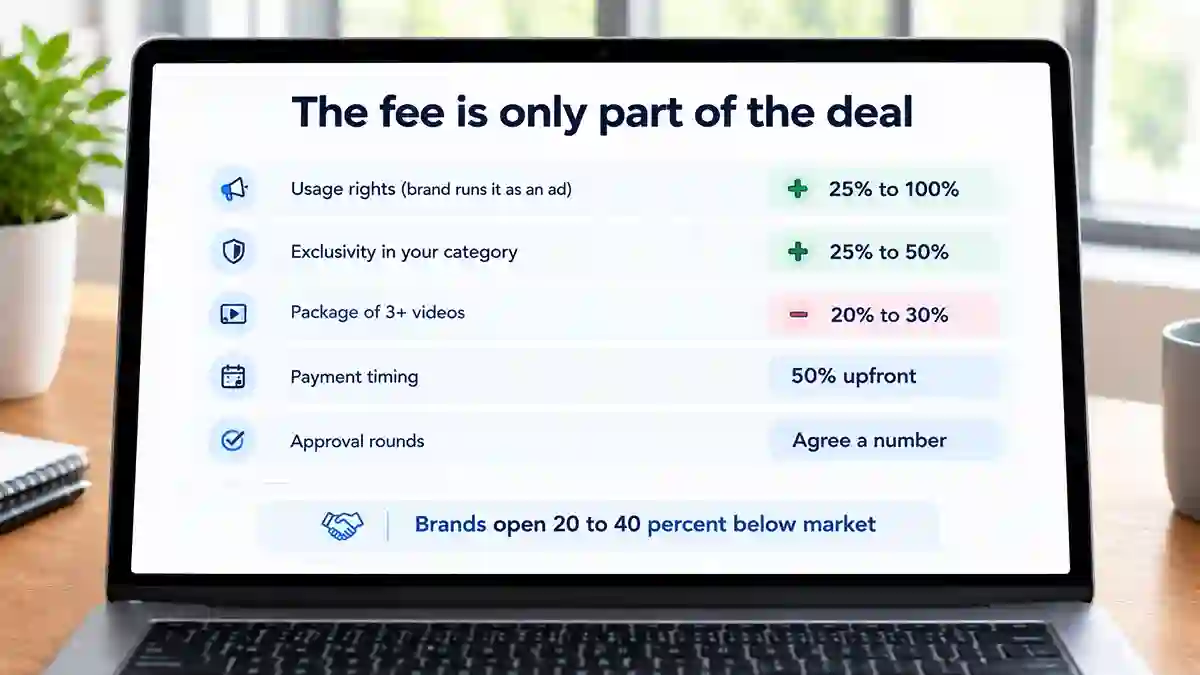
Usage rights. If the brand wants to run your video as a paid ad from their own account, that is a separate product. Published guidance puts the uplift for this anywhere from 25 to 100 percent.
Exclusivity. Agreeing not to work with competing brands in your category locks up future income. That carries a premium, commonly 25 to 50 percent.
Package deals. Brands asking for three or more videos expect a discount, typically 20 to 30 percent. Decide in advance whether the guaranteed volume is worth it to you.
Payment timing. Fifty percent upfront is a reasonable ask and protects you from the most common problem in this market, which is a brand that goes quiet after the video is live.
Approval rounds. Agree a number. Unlimited revisions on a sponsored video will cost you more than the deal is worth.
What Tax Applies to Sponsorship Income?
Worth knowing before you invoice, because this changed recently and most creators have not caught up.
A sponsorship paid to you in rupees by a Pakistani brand is ordinary business income. It is not platform revenue, so the Section 154B withholding that now applies to YouTube and social media monetisation does not cover it.
That distinction matters on your tax return, because the two are treated differently and getting the classification wrong either overpays or invites a correction later. Our guide on freelancer tax Pakistan covers what changed on 1 July 2026 and which of your income streams falls where. FBR’s current rate card is at fbr.gov.pk.
Confirm your own position with a registered tax consultant. This is general information, not tax advice.
FAQs
How many subscribers do I need before brands will pay me?
There is no threshold. Paid cash deals commonly start in the low thousands of subscribers in a focused niche, while broad entertainment channels with far more subscribers sometimes struggle to attract any. Brands care about the fit between your audience and their customer, not your subscriber count.
Do I need to be monetised to take sponsorships?
No, and this confuses a lot of creators. Sponsorship is a private deal between you and a brand. YouTube’s Partner Programme requirements have nothing to do with it. Plenty of Pakistani creators earn from sponsorship before they ever qualify for ad revenue.
Should I charge per video or per thousand views?
A flat fee per video suits you when your views are predictable, which is most established channels. CPM suits you when views swing widely. Whichever you choose, calculate it using the formula above so the number is grounded either way.
A brand offered me free product instead of money. Is that worth taking?
Sometimes, early on, with a brand you would use anyway. It stops being worth it the moment your median views are high enough to calculate a real rate, because product deals set an expectation that is hard to unwind later with that brand.
Working With Unity Films
We manage YouTube channels for creators and businesses across Pakistan. Sponsorship rates come up constantly, and the answer is almost always the same: the rate follows the audience, and the audience follows the content decisions made months earlier.
We script, shoot, and edit in-house, which matters for sponsored work because a brand integration that looks bolted on damages the channel that carried it. Our YouTube channel management work covers the growth side, and YouTube settings covers the configuration underneath it.
If you want a read on what your channel could realistically charge, send us your channel link.
Final Thoughts
There is no single answer to YouTube sponsorship rates in Pakistan, and any article giving you one number without asking about your niche, your format, and your audience geography is guessing.
Work out your own figure. Median views, divided by a thousand, times your niche CPM, plus production, plus a negotiating margin.
Then remember the number that matters more than any of it. A thousand views from Karachi and a thousand views from Chicago are not worth the same to a brand, and that gap is far larger than anything you will win by negotiating harder.