
Right now, someone in Pakistan is on WhatsApp. A shop owner in Saddar checking customer messages. A boutique in Zamzama Karachi taking a new order. A restaurant in Gulberg Lahore replying to a delivery request. A dentist in F-8 Islamabad confirming an appointment. A wholesale supplier in Faisalabad sending catalogs to buyers in Peshawar.
Every one of these is a sale that happened not on a website, not on a form, but on WhatsApp.
That is why WhatsApp marketing is not optional for any Pakistani business in 2026. It is the actual sales channel Pakistani customers use.
This guide walks you through what WhatsApp marketing really is and why Pakistani businesses need it more than any other market. It covers how to set it up properly, what mistakes to avoid, and how to turn WhatsApp chats into real, tracked, growing revenue.
What WhatsApp Marketing Actually Is (In Simple Words)
WhatsApp marketing is the use of WhatsApp to grow your business. That is it.
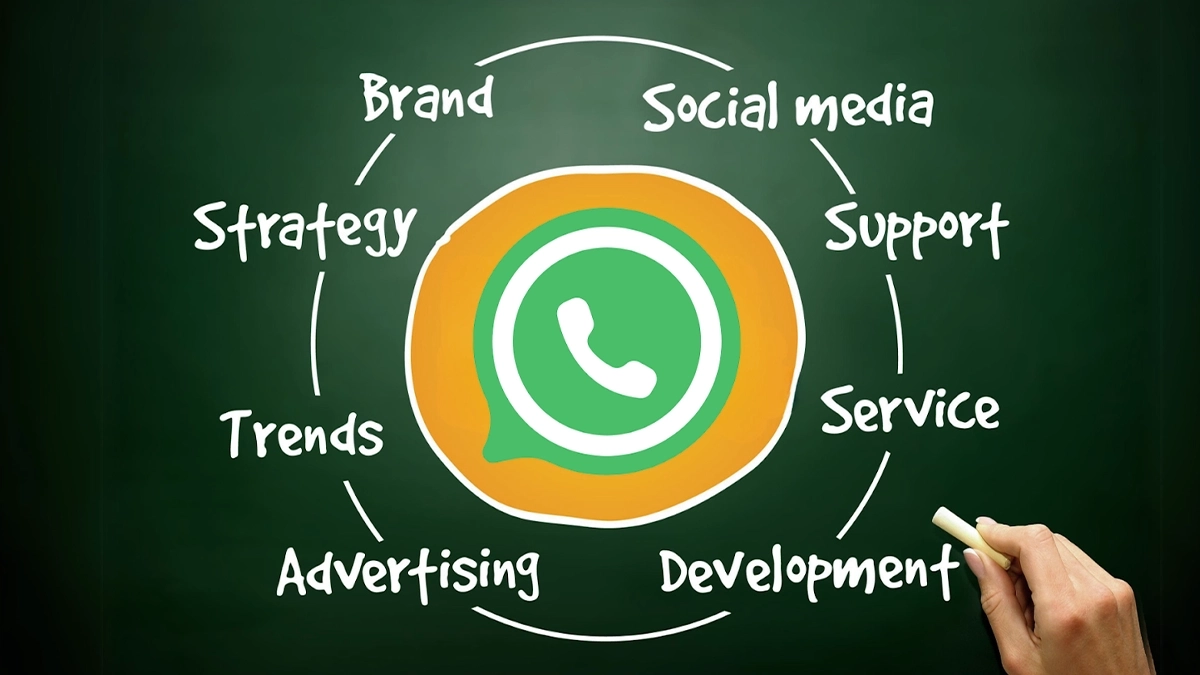
For a Pakistani business, it usually means four practical things:
- A proper WhatsApp Business account with your logo, hours, catalog, and quick replies set up.
- Broadcasts and campaigns that send offers, product updates, or reminders to customers who opted in.
- Click-to-WhatsApp ads on Facebook and Instagram that open a chat directly instead of sending to a form.
- Sales conversations that convert inquiries into paying customers, ideally tracked in a simple CRM.
You do not need all four from day one. Start with a proper WhatsApp Business account. Add the rest over time.
Why WhatsApp Marketing Matters More in Pakistan Than Anywhere Else
Over 116 million Pakistanis are online in 2025, per DataReportal’s Digital 2025 Pakistan report. A huge share of them use WhatsApp daily. According to Statista’s global WhatsApp usage data, Pakistan is consistently ranked among the top countries by WhatsApp monthly active users. For most people here, WhatsApp is the phone, the email, the shopping app, and the customer service line, all in one.
Compare that to how Pakistanis treat other channels. SMS gets checked once and deleted. Email lives in the promotions folder for weeks unopened. Phone calls from unknown numbers often get rejected. But a WhatsApp notification is opened within seconds. That is the difference between marketing that reaches your customer and marketing that gets ignored.
That is different from Western markets where email still dominates or the US where SMS is more common. In Pakistan, WhatsApp is where actual buying decisions happen. Customers find your business on Google or Instagram, then WhatsApp within one minute. They ask questions. They negotiate. They send screenshots. They confirm delivery. They come back next month for another order.
Any Pakistani business that treats WhatsApp as an afterthought is bleeding sales daily to competitors who take it seriously. This is not a “should we do this” question. It is a “how fast can we start doing it right” question.
The Real Problems Pakistani Businesses Face Without WhatsApp Marketing
Talk to any Pakistani business owner without a real WhatsApp plan. You hear the same five problems:
- They lose customers who message and get no reply for hours. By then, the customer has already ordered from a competitor.
- They use a personal WhatsApp number for business. No catalog. No broadcast. No opening hours. No professional look.
- They cannot track which ads brought which WhatsApp inquiries. Money burns on Facebook boosts with no way to prove they work.
- They cannot follow up. Customer chatted last month, disappeared, no easy way to bring them back.
- They repeat the same information 50 times a day. Prices, delivery time, sizes, availability, all answered manually to every new inquiry.
Any one of these is a slow leak. All five together is why so many good Pakistani businesses stay stuck for years.
How WhatsApp Marketing Actually Grows Your Business
Real WhatsApp marketing does not just organize messages. It changes how customers buy.
Inquiries convert faster. A boutique in Anarkali Lahore replying within minutes with a catalog link closes twice as many sales as a competitor who replies next day. A dental clinic in Nazimabad Karachi sending appointment reminders on WhatsApp gets fewer no-shows.
Your ad spend works harder. Click-to-WhatsApp ads on Facebook and Instagram send buyers directly to a chat, not a contact form nobody fills. A restaurant in Islamabad running a click-to-WhatsApp campaign for Ramadan iftar deals books 3x more tables than the same budget on standard ads.
Repeat customers grow naturally. A wholesale shop in Raja Bazaar sending monthly “new stock aa gaya” broadcasts keeps regular buyers coming back without ad spend. A salon in Bahria Town Rawalpindi sending “aap ka trim due hai” reminders books repeat appointments automatically.
Your business becomes scalable. Instead of one person answering the same questions all day, quick replies and catalogs handle 80 percent of common inquiries automatically. Your team focuses on real sales conversations.
How WhatsApp Business Actually Works in Pakistan
There are two versions of WhatsApp for business. Understanding the difference matters.
WhatsApp Business App is the free version. Download it on your phone. Set up your profile, hours, and catalog. Send broadcasts to small lists. Use quick replies. Perfect for small businesses with under 500 monthly customers.
WhatsApp Business Platform (API) is the paid version for larger businesses. It connects with tools like Meta Business Manager, CRMs, and third-party platforms. It lets you send template messages to thousands of contacts, automate replies with chatbots, and integrate with your website, Facebook Ads, and Instagram. Best for ecommerce brands, chains, and any business handling more than 500 customers a month.
For the API version, Pakistani businesses cannot sign up directly with Meta. You need a Business Solution Provider (BSP). Reliable global BSPs that serve Pakistan include WATI, Interakt, Sinch, and 360Dialog. Each handles the Meta approval, template messages, and technical setup. Pricing varies by message volume.
Most Pakistani small businesses should start with the free WhatsApp Business App. When your customer base grows to thousands, upgrade to the API version through a BSP.
One critical rule for both versions: never spam. WhatsApp bans numbers that send unsolicited messages. Only broadcast to customers who explicitly opted in. Give them a way to unsubscribe. Respect their inbox.
How Pakistani Customers Actually Use WhatsApp
Pakistani WhatsApp behavior has three quirks that global guides never mention.
Roman Urdu wins over English. A boutique broadcast saying “Eid pe naya arrivals aa gaya, abhi WhatsApp karein” converts better than “New Eid arrivals now available.” A restaurant caption saying “Aaj Friday special, chicken karahi taiyar hai, order karein” beats a polished English version every time. Speak the customer’s real language.
Voice notes matter. Many Pakistani customers prefer voice notes over typing, especially older buyers and those in traditional markets. Your business should be comfortable receiving and replying with voice notes.
Trust is built through response speed. A reply within 5 minutes feels professional. A reply after 3 hours feels like you do not care. A reply the next day means the customer already bought from someone else. Set expectations upfront. If you close at 8 PM, say so in your business profile.
Timing WhatsApp Marketing Around Pakistan’s Retail Calendar
Pakistan’s retail year has four spending peaks where WhatsApp broadcasts and click-to-WhatsApp ads convert 3 to 5 times higher than normal months.
- Ramadan and Eid ul-Fitr: biggest peak for food, clothing, gifting, and beauty. A boutique in Bahria Town Rawalpindi sending Eid catalog broadcasts to opted-in customers 3 weeks before Eid captures the whole buying window.
- Wedding season (October to March): peaks in December. Salons, boutiques, photographers, caterers, and wedding halls in Chaklala or F-sectors Islamabad see massive WhatsApp inquiry volume.
- Eid ul-Adha and back-to-school (August): food, uniforms, tuition centers see spikes.
- December year-end: corporate gifts, wedding peak, and holiday orders across DHA Karachi to Bahria Town Rawalpindi.
Real example of how this changes results. A boutique in Anarkali Lahore went from 20 monthly WhatsApp inquiries to 200 in four months. The switch: personal WhatsApp to Business App with catalog, quick replies, and Ramadan broadcast campaigns. Same product. Same team. Different WhatsApp strategy.
Common Mistakes Pakistani Businesses Make With WhatsApp Marketing
Seven mistakes we see almost every day:
- Using a personal WhatsApp number for business. No catalog, no hours, no professional look. Customer trust drops.
- Broadcasting to everyone every day. Numbers get banned within weeks. Customers block the business.
- Only replying in English when the customer wrote in Roman Urdu. Feels cold and disconnected.
- No catalog set up. Every inquiry needs manual price sharing. Time wasted.
- Ignoring click-to-WhatsApp ads on Facebook. The single biggest ad opportunity in Pakistan is being ignored.
- No follow-up on old chats. Customer chatted, disappeared, no ping ever again. Missed revenue.
- Measuring nothing. No idea which day brings most inquiries, which ad drives WhatsApp messages, or which product gets asked about most.
Fix any three of these and you already do better WhatsApp marketing than 80 percent of Pakistani businesses.
What Pakistani Agencies Get Right About WhatsApp (And Where They Fall Short)
Credit where it is due. A few Pakistani digital marketing agencies now understand WhatsApp basics. They set up WhatsApp Business profiles for clients. They run some click-to-WhatsApp ads. That is real progress from where the industry was three years ago.
Now the honest part. Most Pakistani agencies fall short on WhatsApp in five specific places.
- They treat WhatsApp as an afterthought, not a channel. They optimize the website and the ads, then hand the customer over to a broken WhatsApp setup that loses the sale.
- They do not train the client’s team on WhatsApp best practices. No response time standards. No template message strategy. No follow-up system.
- They never integrate WhatsApp with other channels. SEO brings visitors. Ads drive traffic. Then WhatsApp closes the sale, but the three teams never coordinate.
- They ignore the WhatsApp Business Platform (API) for growing clients. Even when a business scales to thousands of monthly customers, agencies leave them on the free app version, losing automation and scale.
- They never measure WhatsApp performance properly. No cost per WhatsApp inquiry. No conversion rate from chat to sale. No follow-up rate. All the important numbers are ignored.
Good agencies exist. But even the good ones treat WhatsApp as a side task, not the actual sales layer it is in Pakistan.
Which WhatsApp Marketing Features Should Your Business Start With?
Pick 2 or 3 features based on your business type. Master them. Add more later.
- Restaurants, cafes, boutiques: WhatsApp Business App with catalog, quick replies, and click-to-WhatsApp Meta Ads. Broadcast daily specials to opted-in customers for steady traffic.
- Salons, clinics, personal services: WhatsApp Business App with appointment reminders, quick replies, and follow-up broadcasts. Reminders like “aap ka trim due hai” book repeat appointments.
- Wholesale and traditional retail: WhatsApp Business App with catalog, broadcast lists, and voice-note-friendly responses. Monthly catalog broadcasts grow bulk sales.
- Ecommerce and product brands: WhatsApp Business Platform (API) with order confirmations, abandoned cart recovery, and CRM integration.
- B2B services (agencies, consultants, law firms): WhatsApp Business App with intake templates and CRM follow-up. Personal touch matters more than automation.
How to Measure If Your WhatsApp Marketing Is Working
Follower count and page likes are useless. WhatsApp signals are different. Track these:
- Response time. Average minutes from customer message to your reply. Under 15 minutes is professional. Over an hour is losing sales.
- Conversion rate from chat to sale. Of every 10 WhatsApp inquiries, how many actually buy? If low, the problem is your reply quality, product, or price.
- Cost per WhatsApp lead from ads. Track click-to-WhatsApp ad spend divided by inquiries generated. Compare across campaigns to see what works.
- Broadcast open and reply rates. WhatsApp broadcasts typically get 80 percent+ open rates. If yours is lower, your list has cold contacts or your content is wrong.
- Repeat customer rate. Percentage of WhatsApp inquiries that come from past customers vs new. High repeat rates mean your follow-up is working.
Track these numbers monthly. Real WhatsApp marketing shows up in the inbox flow and the revenue, not in vanity dashboards.
How Unity Films Outclasses Other Pakistani Agencies on WhatsApp
We built our approach around the five gaps most Pakistani agencies leave on WhatsApp.
- WhatsApp is the conversion layer, not an afterthought. Every SEO page, every content piece, every social post, every ad we build pushes visitors to WhatsApp with intent. This is where Pakistani sales actually close.
- We train your team on response speed and templates. Your staff learns how to reply fast, use quick replies, handle voice notes, and follow up without spamming. This is where most agencies drop the ball.
- WhatsApp integrated with every other channel. SEO brings traffic. Video builds trust. Ads drive clicks. WhatsApp closes. All under one coordinated plan.
- We scale you to WhatsApp Business Platform (API) when the time is right. No leaving growing clients stuck on the free app version. When your monthly inquiries cross a threshold, we set up automation, chatbots, and CRM integration.
- Reports show WhatsApp performance, not just clicks. Every monthly report includes WhatsApp inquiry count, cost per lead, conversion rate, and follow-up impact. Actual business numbers, not vanity metrics.
We work with businesses across Pakistan: Karachi, Lahore, Islamabad, Rawalpindi, Multan, Peshawar, Faisalabad, Sialkot. Restaurants, boutiques, clinics, wholesale, ecommerce, B2B services. What we do not do: set up WhatsApp and walk away. WhatsApp needs ongoing coordination with every other marketing layer.
Chats are not the goal. Customers are. If your business is ready to turn WhatsApp into a real sales channel, reach out to Unity Films. Send us your business name and what you want to grow. We come back with a plan.
FAQs
Is WhatsApp marketing legal in Pakistan?
Yes, when done properly. You must have explicit opt-in from customers before sending broadcasts. Never buy contact lists. Never message people who did not agree to receive messages. Following WhatsApp’s own policies keeps you safe.
Do I need the paid WhatsApp Business API to start?
No. Start with the free WhatsApp Business App. It covers almost everything a small business needs. Upgrade to the paid API version only when you cross a few thousand monthly customers or need serious automation.
Should my WhatsApp messages be in Urdu, English, or Roman Urdu?
Match your customer. For traditional Pakistani buyers, Roman Urdu usually wins. For corporate B2B, English works. For most consumer businesses, a mix of English product info with Roman Urdu conversational messages performs best.
How often can I broadcast without getting my number banned?
No hard rule, but common sense applies. Once or twice a week for opted-in customers is usually safe. Daily broadcasts to the same list get complaints and eventually a ban. Every message must have value.
Final Thoughts
WhatsApp marketing in Pakistan is not the same as in the US, UK, or Europe. Here, WhatsApp is the primary sales channel, not a support add-on. Every serious Pakistani business needs a real WhatsApp strategy in 2026.
Ready to start? Talk to Unity Films about a WhatsApp marketing plan built for Pakistani businesses.